
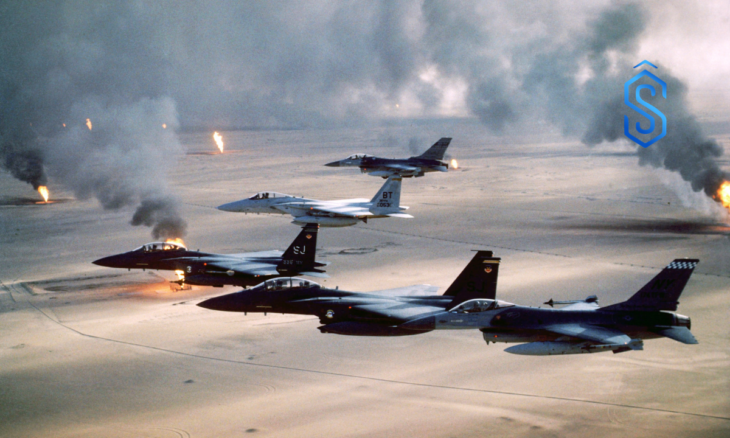
The prolonged West Asia conflict has entered its third month, reshaping the global macroeconomic environment and increasing pressure on inflation, currencies, capital flows and policy flexibility across economies, including India.
What initially appeared to be a temporary geopolitical disruption has now evolved into a sustained macroeconomic condition that markets and policymakers must increasingly adapt to.
Multiple rounds of diplomatic engagement have resulted in intermittent pauses but no durable resolution. Each announcement has alternately triggered optimism and caution across global asset classes.
The broad contours of the shock are now becoming clearer, with the duration of the West Asia conflict emerging as the key variable influencing global growth, inflation trajectories, external balances and fiscal-monetary coordination.
The West Asia conflict has already shifted the global environment from one driven by disinflation and monetary easing toward a renewed phase of energy-led inflation.
This transition, which first became visible in March and more evident in April, is now influencing fiscal, monetary and market decisions worldwide.
While India enters this phase with stronger domestic buffers compared to previous global crises, the economic costs of an extended conflict are becoming increasingly visible.
Global Growth Outlook Weakens Amid Energy and Supply Pressures
According to the International Monetary Fund (IMF), global growth is projected at 3.1% in 2026 and 3.2% in 2027, while inflation is expected at 4.4% in 2026 before moderating thereafter. However, downside risks continue to intensify.
Scenarios involving global growth closer to 2% alongside inflation approaching 6% are no longer being viewed as implausible if energy prices remain elevated and supply chain disruptions deepen further.
The composition of global risks has also changed significantly. Inflation expectations have moved upward, several major central banks have paused policy easing, and oil-importing emerging economies are facing renewed pressure on their external balances.
At the same time, economies connected to the AI-led investment cycle — particularly the United States, Taiwan and South Korea — continue to benefit from strong technology-driven capital expenditure.
Robust first-quarter growth in these markets reflects continued investor enthusiasm around semiconductors and artificial intelligence supply chains.
As a result, the global economy is increasingly bifurcated between economies benefiting from AI-led investments and those more exposed to energy, food and shipping disruptions caused by the prolonged West Asia conflict.
Also Read: Hormuz Impact on Mumbai Real Estate: Why South Mumbai Homes Will Get Costlier
Rupee Weakness and Inflationary Pressures Intensify
Since the onset of the prolonged West Asia conflict, the Indian rupee has weakened by nearly 5%, crossing the ₹95-per-US dollar mark on 11 May 2026 before weakening further.
Persistent foreign portfolio investor (FPI) outflows, rising crude oil prices, higher gold prices and sustained dollar strength have collectively weighed on India’s balance of payments.
Despite currency pressures, India’s domestic economy has demonstrated resilience. High-frequency indicators continue to reflect strength in both rural and urban demand.
Double-digit growth has been recorded in two-wheeler sales, passenger vehicle sales and tractor sales. Bank credit growth also remained robust at 16% year-on-year in April.
However, the policy environment has become more challenging. Wholesale Price Index (WPI) inflation accelerated to 8.3% year-on-year in April, marking the highest level in 42 months and signalling that energy and commodity-related pressures are increasingly feeding into the production pipeline.
Consumer Price Index (CPI) inflation has not yet fully reflected these pressures. Nevertheless, the combined impact of higher fuel prices and the recent Minimum Support Price (MSP) increase for kharif crops could potentially add 25–35 basis points to headline inflation.
If the prolonged West Asia conflict continues into the first half of FY27, pressure on inflation, the current account deficit and policy coordination is expected to intensify further.
West Asia Conflict: Equity Markets Recover but Volatility Persists
Global equity markets witnessed a strong rebound in April following the sharp correction seen in March. The MSCI World Index rose 9.4%, while the MSCI Emerging Markets Index gained 14.5%, supported by stronger earnings expectations and renewed investor interest in technology and AI-linked sectors.
Emerging markets such as South Korea and Taiwan outperformed due to sustained optimism surrounding semiconductor and AI supply chains.
Indian equities also recovered a portion of earlier losses. The Nifty 50 index gained 7.5% in April, recording its strongest monthly rise in 28 months.
The rally was supported by improved global sentiment, relatively attractive valuations following the March correction and continued domestic liquidity support.
However, momentum weakened during the first half of May. Higher crude oil prices, rupee depreciation, concerns surrounding the IT sector and continued foreign selling pushed the Nifty 50 down 1.5% by 15 May.
The prolonged West Asia conflict has also widened the divergence between foreign and domestic investment flows.
Foreign portfolio investors continued their selling streak, with outflows of US$6.5 billion in April and US$2.8 billion during the first half of May. Total outflows for calendar year 2026 have now reached US$23.5 billion.
Domestic institutional investors (DIIs), however, remained a stabilising force. DIIs invested ₹51,064 crore in April and extended their buying streak to 33 consecutive months, supported by resilient equity mutual fund inflows and sustained Systematic Investment Plan (SIP) contributions.
West Asia Conflict: Bond Markets Face Pressure from Oil and Fiscal Concerns
Bond markets have remained relatively steadier compared to equities but continue to face pressure from inflation and oil-related concerns.
Globally, fixed-income markets delivered mixed performance during April, with credit outperforming sovereign debt. Government bond yields remained sensitive to inflation expectations, oil price movements and fiscal concerns.
In India, the 10-year government security yield softened to around 6.86% by mid-April before hardening again toward end-March levels.
The long end of the yield curve continues to face constraints from elevated crude oil prices, hawkish commentary from the US Federal Reserve, tighter liquidity conditions and supply-related concerns.
Meanwhile, the Reserve Bank of India’s decision to maintain the repo rate at 5.25% has kept the domestic policy environment relatively stable, though not particularly accommodative.
The prolonged West Asia conflict is making fiscal-monetary coordination increasingly important, especially if energy-driven inflation persists while growth remains vulnerable to external weakness.
West Asia Conflict: Domesticisation of Equity Markets Continues
One of the key structural shifts highlighted in recent market trends is the continued domesticisation of equity market ownership in India.
FPI ownership in NSE-listed companies declined further during the March quarter amid record annual outflows of US$19.6 billion, falling to a 17-year low of 15.8%.
In contrast, domestic mutual fund ownership rose to a record high of 11.4%, marking the eleventh consecutive quarter of record highs.
Domestic institutional investor ownership in NSE-listed companies reached 19.6%, remaining above FPI ownership for the sixth straight quarter — a phenomenon last observed in 2003.
Direct individual ownership declined to a five-year low of 9.1%. However, when combined with mutual fund holdings, individuals still account for 18.7% of the market, close to the peak recorded in September 2025.
Although household equity wealth declined during FY26 due to the sharp market erosion seen in the March quarter, cumulative wealth creation since April 2020 remains significant at approximately ₹44 lakh crore.
The prolonged West Asia conflict has therefore not eliminated market vulnerability but altered how financial stress is distributed and absorbed within the domestic market ecosystem.
West Asia Conflict: Corporate Bond Market Gains Importance
India’s corporate bond market has continued to expand steadily, with outstanding bonds reaching nearly ₹59 lakh crore in FY26, equivalent to around 17% of GDP.
Primary issuance exceeded ₹9 lakh crore during the period.
However, despite this growth, the market remains relatively shallow compared to larger global peers. Issuances continue to remain concentrated among higher-rated issuers and are still dominated by private placements.
The secondary market remains comparatively weaker, although digital execution platforms such as Electronic Book Provider (EBP), Request for Quote (RFQ) and Online Bond Platform Providers (OBPP) have improved transparency and accessibility.
As the prolonged West Asia conflict increases external volatility, the importance of a deeper corporate bond market is becoming more pronounced.
A more developed bond market could diversify financing channels, improve price discovery and reduce excessive dependence on the banking system during periods of stress.
Retail Participation Expands Across India
Exchange data for April also highlighted continued deepening of India’s retail investor ecosystem.
Equity fundraising rebounded sharply, led mainly by preferential issuances, while IPO mobilisation remained cautious at the start of FY27.
The total registered investor base at the National Stock Exchange (NSE) crossed the 13-crore mark, with investor participation expanding geographically and becoming increasingly younger. The median investor age now stands at 33 years.
The equity cash segment recorded strong trading activity, with average daily turnover rising to ₹1.3 lakh crore and average trade size touching a 65-month high.
However, trading activity remains concentrated among higher-value investors, even though smaller participants constitute the majority of active investors.
This divergence between broader participation and concentrated turnover remains a defining feature of India’s capital market structure.
West Asia Conflict: Commodity Hedging and Gold Market Reforms Gain Momentum
The NSE has also expanded its product architecture in recent months by introducing instruments linked more closely to commodity hedging requirements.
New products such as monthly electricity futures, smaller gold contracts and dated Brent crude oil futures indicate a gradual expansion of formal risk-management avenues.
Electronic Gold Receipts (EGRs) may also strengthen the organised investment gold market by enabling dematerialised ownership alongside the option of physical delivery.
Over time, these initiatives could help connect India’s vast privately held gold reserves more effectively with formal market infrastructure.
West Asia Conflict Becoming a Structural Macro Condition
Developments over the past two months increasingly point toward a structural pattern where external shocks are transmitted through energy prices, currencies, inflation and capital flows.
The prolonged West Asia conflict is gradually narrowing policy flexibility and increasing the economic cost of treating the disruption as temporary.
India’s domestic economy and capital markets remain better positioned than in earlier crises due to stronger domestic participation, diversified financing channels and improved macroeconomic fundamentals.
However, resilience does not imply immunity.
The longer the prolonged West Asia conflict persists, the more it must be understood as a broader macroeconomic condition rather than a temporary disturbance. Its cumulative impact is visible through rising energy prices, inflationary pressures, capital flow volatility and tightening policy space.
Preparedness through stronger buffers, deeper financial markets and continued policy coordination will therefore remain critical in navigating an increasingly uncertain global environment.